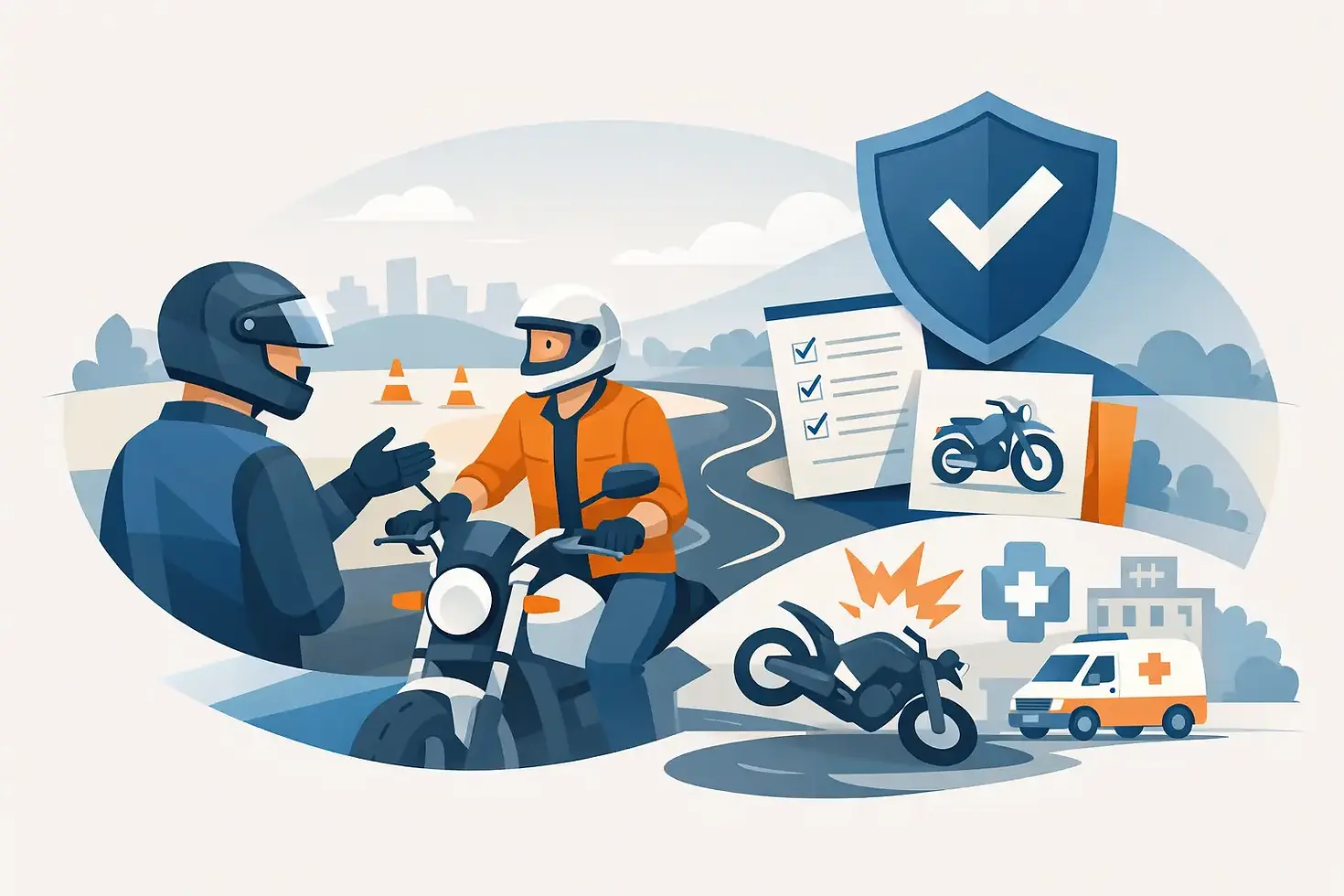
Motorcycle Lesson Insurance Risks Explained

Cheap motorcycle lessons usually stop being cheap the moment something goes wrong.
That is the real problem with motorcycle lesson insurance risks. A lot of riders assume that if a bike has insurance, they are covered while learning on it. That assumption can cost you a claim denial, a ticket, personal liability for damage or injury, and a serious mess if police attend the scene and discover you were taking a lesson from someone who is not legally qualified to provide one.
If you are getting ready for your MST or road test in British Columbia, this is not a technical detail. It is one of the biggest reasons to be careful about who is teaching you, what bike you are riding, and whether the lesson is actually legitimate.
Why motorcycle lesson insurance risks get ignored
Most new riders are focused on the obvious things. They want to learn clutch control, stop stalling, pass the MST, and not look shaky in traffic. Fair enough. Insurance usually feels like paperwork until the day it suddenly becomes the only thing that matters.
The problem is that social media has made it very easy for unlicensed "trainers" to present themselves as instructors. They post a few videos, talk confidently about test routes, and offer a lower price than a licensed school. For a beginner, that can sound good enough.
It is not good enough.
A person can be an experienced rider and still not be a qualified instructor. Those are not the same thing. Riding for years does not automatically mean they understand legal instruction, risk exposure, or how insurance applies during a lesson. It also does not mean they know how to teach you skills in a way that holds up under pressure on test day or in real traffic.
What actually creates the insurance risk
The biggest issue is not just poor coaching. It is the legal status of the lesson.
If somebody is effectively renting you a motorcycle and coaching you without the proper licensing and structure, the insurance on that motorcycle may not apply the way you think it does. Once police or an insurer establish that you were using the bike for an unauthorized lesson, the situation can turn fast. What looked like a casual paid session in a parking lot or on the road can become an invalid use scenario.
That matters because insurance companies do not pay claims based on what you hoped was covered. They look at the facts. Who owned the motorcycle? Who was riding it? What was the purpose of use? Was this a legitimate lesson? Was the person providing instruction legally authorized to do so? Those details are the whole case.
If the answer reveals an unlicensed training setup, you may be standing there with damage to the bike, damage to somebody else's car, an injured road user, and no real protection.
Motorcycle lesson insurance risks in the real world
Here is where this gets serious. Suppose you are on a lesson with a Facebook trainer who has given you a bike and is telling you how to pass the road test. You pull out poorly, panic, and clip a vehicle. Maybe it is minor. Maybe it is not. Police show up. Questions get asked.
Now the bike is not just a bike. It is part of an unauthorized paid lesson. If the insurance is invalidated, you can be treated as operating without proper coverage. That can mean a ticket for riding without insurance. It can also mean personal liability for injury or property damage to another road user.
That is not scare tactics. That is the financial reality when people cut corners on legal instruction.
And remember, beginners are exactly the riders most likely to make mistakes under stress. That is why proper training matters so much. Early lessons are when clutch errors, sudden braking, missed shoulder checks, poor lane positioning, and bad intersections decisions happen. In other words, the period where you most need proper coverage is also the period where sloppy lesson setups are most dangerous.
The hidden cost of learning from the wrong person
A lot of riders compare only the upfront price. They see one lesson advertised for less and think they are being smart.
But cheap instruction often comes bundled with expensive risk. If the person teaching you is just sharing their own opinions, you may get bad habits that hurt you on the MST and the road test. If they are simply handing over a motorcycle and telling you to practice in a parking lot, you are not paying for instruction. You are paying to be exposed.
Even if nothing crashes, you can still lose. You waste time learning the wrong things. You build habits that need to be corrected later. You go into the test with shaky fundamentals. Then you end up paying again for proper coaching.
A legitimate instructor is not charging more just for the sake of it. You are paying for qualified teaching, legal structure, professional accountability, and a training method designed to improve your odds of passing and riding safely after the test.
What a legitimate lesson should look like
A proper motorcycle lesson is not just somebody who rides well talking at you in a parking lot. It should be delivered by a licensed instructor operating within the correct framework. That matters for both safety and legal protection.
Good instruction is also structured. It should identify your actual level, correct errors in real time, and build skills in the right order. For a beginner, that might mean friction zone work, starts and stops, braking, slow control, scanning habits, and intersection awareness before moving into more demanding traffic work. For a returning rider, it may be about rebuilding judgment, lane positioning, and hazard response.
The point is simple. Real instruction is systematic. Random coaching is not.
One of the reasons riders in the Lower Mainland look for proper private instruction is that they want feedback that is immediate and specific. That is where a qualified coach makes a huge difference. You want someone who catches the missed shoulder check now, not after it becomes your default habit. You want someone who hears hesitation in your throttle control and fixes it before it causes a wobble in traffic.
Why test prep and legal training should go together
A lot of unofficial trainers sell one thing above all else: passing the test. That pitch works because people are nervous and want fast results.
But test prep without legal, professional instruction is a bad trade.
First, nobody's personal theory about how to pass the MST has the same weight as actual instructor training. Second, road test coaching that ignores legal exposure is reckless. If you are out on public roads during a lesson, the consequences are not academic. You are part of live traffic with real vehicles, real pedestrians, and real liability.
Proper coaching should improve both your pass rate and your judgment. Those are connected. The rider who learns to scan intersections, spot wheel movement, manage lane position, and make solid observations is not just better prepared for the examiner. That rider is less likely to create a claim in the first place.
How to protect yourself before booking a lesson
Ask direct questions. Is the instructor licensed? Is the lesson being provided legally as instruction, not disguised as a bike rental with advice? Is the training focused on recognized teaching methods rather than personal opinion? If a provider gets slippery when you ask simple questions, that is your answer.
You should also pay attention to how they talk about risk. Serious instructors do not brush it off. They understand exactly what is at stake because they work with beginners and returning riders who need proper guidance, not shortcuts.
This is one area where confidence should come from credentials and outcomes, not social media swagger. A school like The Shiny Side Up makes that distinction clear because legitimate coaching is the whole point. Riders are not just buying seat time. They are paying for qualified instruction that protects their progress and reduces the chance of a legal or financial disaster.
The better question to ask
Instead of asking, "Who can teach me cheapest?" ask, "Who can teach me properly?"
That question usually leads you somewhere better. It leads you toward licensed instruction, a real teaching method, and a lesson setup that does not leave you hanging if something goes wrong. It also gives you a better shot at passing the MST and road test without having to unlearn nonsense from somebody who was never qualified to teach you in the first place.
Motorcycling asks for good judgment early. Picking your instructor is one of the first real judgment calls you make, and it tells you a lot about how safely the rest of your riding will go.


Comments